
Table of Contents
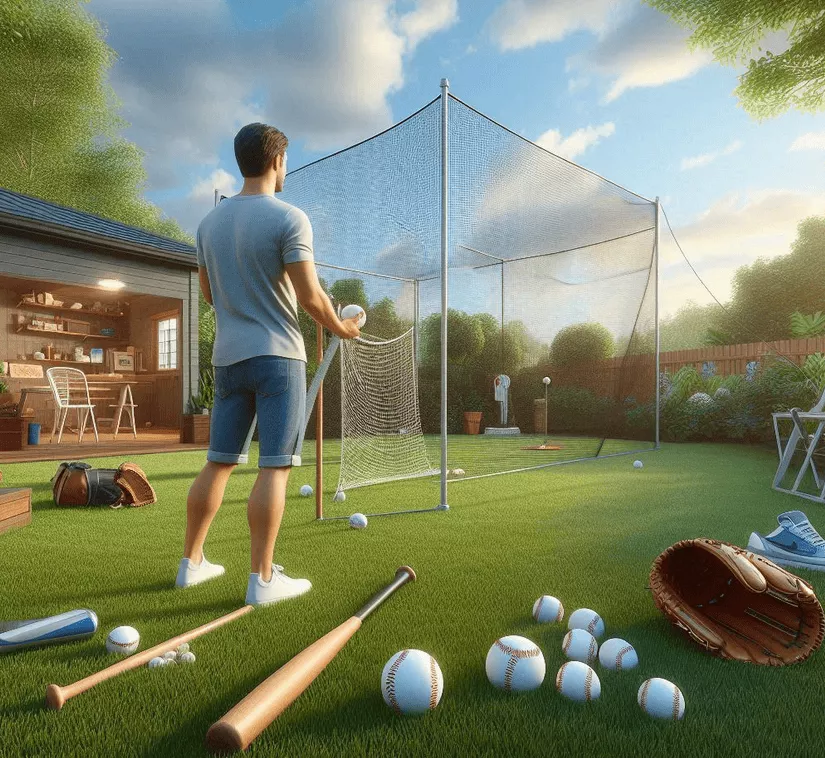
The pursuit of baseball excellence is often measured in repetitions. While team practices are crucial, the players who truly separate themselves from the competition are those who put in extra work in their own backyard. Transforming a portion of your property into a personal training ground begins with the most important piece of equipment: the Baseball Batting Cage Net for Practice – Batting Cages Inc.. A high-quality net allows a hitter to swing with full confidence, knowing the ball is safely contained rather than flying toward a neighbor’s window or a parked car. Choosing the right net, however, requires looking beyond just the price tag and understanding the technical specifications that determine durability, safety, and overall value.
Understanding Netting Material and Strength
The longevity of a batting cage net is almost entirely dependent on the material from which it is constructed. The industry standard for high-performance nets is high-tenacity polypropylene or nylon. Nylon is often considered the superior choice for home use because of its incredible strength and ability to withstand the repeated impact of high-velocity baseballs without stretching significantly. It is naturally resistant to abrasion, which is crucial because the friction of the ball passing through the mesh can wear down inferior materials quickly over a single season.
When evaluating strength, you will encounter a technical term known as twine size, often measured in numbers like 21, 36, or 42. These numbers relate to the thickness of the individual strands of twine. For a home setup that will be used by youth players using lightweight aluminum bats, a number 21 net may suffice. However, if the net will be used by high school players, college athletes, or anyone using heavy wood bats, a number 36 or 42 net is absolutely essential to prevent premature tearing.
Knotted Versus Knotless Construction
The manufacturing technique of the net affects not only its durability but also its overall performance. Historically, knotted netting was the only option. While these nets are strong, the intersections where the knots are tied create weak points where the mesh can rub against itself and fray over time. Furthermore, knotted nets tend to absorb more impact, which can cause the ball to rebound awkwardly or the net to stretch out of shape.
Modern technology has introduced knotless netting, which is widely considered the superior option for home batting cages. In knotless construction, the twine is woven together continuously, creating a uniform surface with no weak points at the intersections. This results in a net that is stronger, lasts longer, and has a flatter surface that is less prone to sagging. A knotless net provides a more predictable rebound for the ball, which is ideal for players practicing against a pitching machine, as it helps prevent dangerous ricochets back toward the hitter.
Evaluating UV Protection and Environmental Resistance
A home batting cage is exposed to the elements twenty-four hours a day. Sunlight is the biggest enemy of netting material, as ultraviolet rays degrade the synthetic fibers, making them brittle and prone to snapping. To combat this, high-quality nets are treated with UV inhibitors during the manufacturing process. This treatment is often visible as a dark black or green sheen on the netting, and it significantly extends the life of the product by preventing the sun from eating away at the material.
In addition to UV protection, you should consider the net’s resistance to moisture. If you live in an area with high humidity or frequent rainfall, polypropylene netting is a good choice because it does not absorb water, preventing the net from becoming heavy and sagging under its own weight. If you choose nylon net, ensure it has been treated with a water-resistant coating to prevent rot and mildew. Investing in a net with robust environmental protection is the best way to ensure your backyard investment lasts for years rather than just a few months.
Conclusion
Choosing the right batting cage net is a decision that balances safety, durability, and budget. By focusing on high-tenacity nylon or polypropylene, opting for knotless construction, and ensuring robust UV protection, you can create a training environment that will withstand the rigors of daily practice. The right net doesn’t just contain the ball; it gives the hitter the psychological freedom to swing with full intensity, knowing their backyard is protected. With a little research and careful selection, you can build a backyard training facility that will help elevate your game to the next level.



More Stories
Retro Games: Why We Still Play
Shark Tales Party Games and Activities
Major League Baseball – Keeping Track