
Table of Contents
History Of Basketball shapes how fans plan, watch, and enjoy the sport, and the details below explain what matters most. This topic is worth understanding before you commit time or money, so use this guide as a practical starting point.

How to Play Basketball
Basketball is a game enjoyed by many different kinds of people. We see the sport played around the world. Any age group can get involved in the sport. It is not terribly difficult to understand. The basics of the game are easy, but people may find some of the rules challenging. I would first like to begin with a little bit of history on the sport of basketball. It was created in 1891 by Dr. James Niasmith.
He was a Canadian born physical education teacher in Massachusetts. He came up with the idea on a rainy day. He was trying to keep his students active despite the weather. He decided to nail in a peach basket 10 feet off the ground. Students would then have to shoot a soccer ball into that peach basket. He also made up some of the basic rules that same day.
The peach basket proved to be inefficient though because the bottom was still there. So, every time someone would make the ball in the basket you would have to retrieve the ball. A hole was drilled in the basket later on so that the ball could be easily retrieved. Peach baskets were used up until 1906 where then after metal hoops were used.
The peach baskets were first nailed to the mezzanine balcony of the court, but that later proved to be trouble some because people would interfere with the shots. That is when the backboard was brought in to prevent such interference and it also provided a chance for rebounds. The first official basketball game was played at Naismith’s gym on January 20, 1892 with nine players. The final score of the game ended up being 1-0.
Back then, you only got 1 point for each made basket. The court they played on was half the size of a regulation NBA court.
Now, I would like to go into further detail about how the game is played today. A modern day basketball game has two teams consisting of five players each. What this means is that there is a maximum of ten players allowed on the court at one time. There are substitutes that can come in on dead ball plays. Dead ball plays mean that the ball is not currently in use by a player.
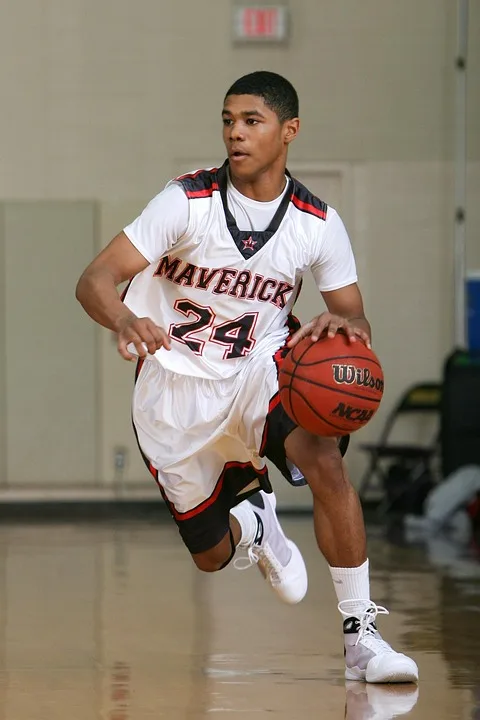
The game begins with a tip off. A tip off is where the referee or official will throw the ball straight up at the center of the court and the tallest player from each team will try to tip it to their teammates. Once a person comes into possession with the ball, he/she must dribble the ball. Dribbling is the motion of bouncing the ball up and down on the court with one hand.
You can dribble while moving or standing still. Once you stop dribbling the ball, you must either pass it to another teammate or shoot. If you walk with the basketball that will be considered traveling and the other team will get the ball. The next item to be discussed is the proper technique for shooting the basketball. You generally want to be as close to the basket as possible because it will be easier to make the shot.
There are two point shots which are inside an arch and there are three point shots which can be made from outside the arch. I have always been taught an acronym for shooting the basketball: BEEF. B stands for balance, E stands for eyes on the target (hoop), E stands for elbow, and F stands for follow through. In order to have an effective shot, you want to be well balanced with your knees bent.
You also to make sure your eyes are always on the target so that you can aim the ball. Your elbow should be almost tucked into your side, so that it will remain straight. This will allow your shot to go where you want it to. Your follow through is also another key component to a good shot. A good follow through will be above your head and aimed toward the basket.
The basketball should be released with a flick of the wrist. If all of these things are done correctly, you should have a decent shot. It does take a lot of practice before getting the hang of it.
The next important thing to discuss is fouling. Any disruptive physical contact will be penalized by a foul. In the NBA, if you receive six fouls in a single game then you are out for that game. If you foul person in the act of shooting the ball, that person will be awarded two free throws. Free throws are shot from a designated line 15 feet away from the basket. No person can contest the shot of a free throw.
If a foul is committed and the person is not shooting, then you will inbound the ball from a designated spot. There are many different types of fouls and I will not go into all of them. The main four you should know are personal, offensive, technical, and flagrant. Personal and offensive are regular fouls that occur in a basketball game.
Technical and flagrant fouls are serious fouls that usually result from doing something overly physical or saying something out of line.
When trying to learn the game of basketball, you need to know what kind of player you will be. There are five different positions on the floor. They are point guard, shooting guard, forward, power forward, and center. A point guard tends to have superior dribbling and passing skills. He also tends to have exceptional speed and control. Point guards run the whole offense. A shooting guard is just what it sounds like.
Their job is to get open and be able to make a lot of shots. Both types of guards are usually shorter individuals. Forwards are generally taller people that can muscle their way to the basket and make short range shots and fight for rebounds. The center is normally the tallest player on the team. They are there to basically just place the ball in the basket and jump for rebounds.
Knowing all these things can help you play the game more effectively. I hope this information will help aid in your basketball playing abilities. It is important to understand the fundamentals before you get into the more advanced aspects of the game. Good luck to all who embark on becoming basketball players.
Related reading: Basketball History, Five NBA Sneaky Tricks How to Play Basketball Like a Pro, How the Harlem Globetrotters Changed Basketball Forever, Midget Tossing – A Lost Art, Best Rip City Teams Ranked.
History Of Basketball: What Fans Should Know
Keep your plan flexible. Schedules, prices, and availability can change, so build in a little room for adjustments. Fans who stay flexible with the subject tend to handle delays and last-minute updates far better.
Value matters as much as access. Compare ticket tiers, travel costs, and included benefits before you choose. Readers who treat the subject as part of a broader plan usually get more from the event than those who book on impulse.
Together they show how history of basketball fits into the wider picture and which details deserve the most attention.
Use official sources for the facts. League sites, event organizers, and primary records are the best places to confirm dates, rules, and results. That habit keeps your understanding of history of basketball accurate and current.
Context makes every detail easier to judge. Look at the history, the key names involved, and the way the event or topic has changed in recent years. That background turns a casual interest in history of basketball into a much more rewarding experience.
Ask questions before you spend. Compare what each option includes, read recent reviews, and check the refund or exchange policy. A careful look at history of basketball helps you avoid overpaying for features you will never use.
Quick Checklist for History Of Basketball
- Understanding history of basketball starts with knowing the schedule, the venue, and the audience it attracts.
- Fans who follow history of basketball closely usually track official updates before making plans.
- The best way to evaluate history of basketball is to compare value, access, and overall experience.
- Beginners can enjoy history of basketball by starting with a reliable source and a simple plan.
For official rules, schedules, and updates, check www.nba.com. It is the best place to confirm details before you plan your next trip.
History Of Basketball: Quick Answers
- Understanding history of basketball starts with knowing the schedule, the venue, and the audience it attracts.
What should fans know about this topic?
History Of Basketball is easier to understand when you start with the schedule, venue, and audience. Check official sources for current details, compare the options that fit your budget, and plan ahead so the experience stays enjoyable from start to finish.
How can beginners get started?
Start with a reliable guide and a short checklist. Confirm dates, prices, and access rules first, then decide what matters most for your goals. Beginners who keep the plan simple usually avoid costly mistakes and enjoy the event more.
Why does it matter for fans?
It connects fans with the sport’s biggest moments and gives them a clear way to follow the action. Understanding the context, key names, and recent changes helps you judge what is worth watching, buying, or attending.

John Oey is a senior sports writer at Blowers Racing covering NASCAR, drift, Olympics, and sports analytics. 7+ years, 180+ guides. Method: official rulebooks, historical archives, and statistical databases. Author of 1,750 sports guides since 2022.



More Stories
Kobe Beats Shaq on MLK Day 2006
Johnny Flynn, Syracuse University (SU) Orange Basketball Star, Has Potential For Bright NBA Career
What is Beer Pong?