
Table of Contents
Keeping a car in good condition doesn’t have to mean an expensive trip to the garage every time something feels slightly off. With a bit of know-how and the right kit, most routine maintenance and cleaning jobs are well within reach of the average driver — and doing them yourself can save a genuinely surprising amount of money over the course of a year, without needing anything more than a free afternoon and a bit of patience.
Whether you’ve just passed your test or you’ve been driving for decades, this checklist runs through the essentials: the mechanical checks that keep your car safe and reliable, the cleaning routine that keeps it looking and smelling like new, and a few habits that make the whole process far less of a chore once they’re in place.
Start with the basics
Before diving into anything more involved, it’s worth building a monthly habit around the fundamentals. Check your tyre pressures (including the spare) when the tyres are cold, and take a look at the tread depth while you’re down there — the legal minimum in the UK is 1.6mm, but most tyre manufacturers recommend replacing well before that to keep proper grip in wet conditions. Top up your oil and coolant if they’re running low, check your washer fluid, and give your wiper blades a once-over for splitting or smearing, since a blade that’s dragging rather than clearing can turn a light shower into a real visibility problem.
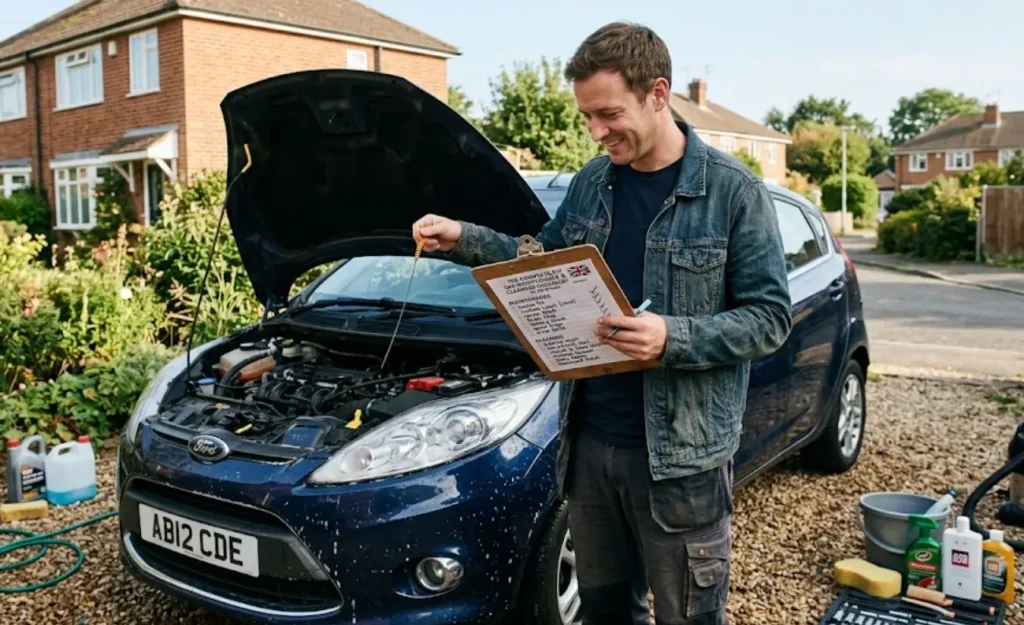
None of this requires specialist skill, but it does require the right products and tools on hand so you’re not caught out mid-check. A well-stocked car maintenance checklist of oils, fluids, and testers kept in the boot means you can deal with most issues the moment you spot them, rather than putting them off until they become expensive — a slow oil leak ignored for months is a very different repair bill to one caught early.
Build a simple maintenance calendar
The easiest way to stay on top of car care is to stop treating it as something you remember to do and start treating it as something scheduled. A five-minute check every fortnight — tyres, lights, fluid levels — combined with a more thorough monthly look-over catches the vast majority of problems while they’re still cheap to fix, especially before long trips or the change of seasons, when a car’s weak points tend to show themselves.
It’s also worth keeping a simple log of what’s been done and when — oil changes, filter swaps, tyre rotations. A documented service history is genuinely useful if you come to sell the car, and it can help a mechanic diagnose a problem faster if something does eventually need professional attention.
Brakes, battery and belts
Every few months it’s worth listening and looking for the early warning signs of bigger problems. A high-pitched squeal when braking usually means your pads are wearing down and due a check; a slow-cranking engine on a cold morning often points to a battery nearing the end of its life, especially if it’s more than four or five years old. Pop the bonnet occasionally and look over the drive belts for cracking or fraying — a belt that fails on the motorway is a far worse day than one replaced at home on a Sunday afternoon.
These aren’t jobs that need to be dramatic or difficult. A basic set of ramps, a torque wrench and a decent multimeter will cover the vast majority of checks a home mechanic needs to make, and they pay for themselves after a handful of uses. A multimeter in particular is worth the small outlay — testing battery voltage takes seconds and tells you far more than guessing based on how sluggish the engine feels on a cold start.
When to stop DIYing and call a garage
Part of being a confident home mechanic is knowing where the line is. Anything involving the braking system beyond a visual pad check, suspension components, or airbags and other safety electronics is best left to a qualified garage — the cost of getting these wrong isn’t just financial. Similarly, if a warning light comes on that you can’t immediately explain, a cheap OBD code reader will tell you what it means in seconds, which at least lets you make an informed decision about whether it’s something you can address yourself or something that needs a professional look.
Cleaning: more than just curb appeal
A clean car isn’t just about looking good in the school run car park — regular washing actually protects the paintwork and bodywork from the road grime, salt and bird droppings that cause corrosion over time. A proper two-bucket wash with a pH-neutral shampoo, followed by a decent wax or sealant every couple of months, will keep the exterior protected through a British winter, when roads are gritted and paintwork takes the most punishment.
Inside, a weekly vacuum and a wipe-down of the dashboard and door cards stops dust and grime building up in places that are much harder to clean once they’ve been left. For anyone who eats in the car, does a lot of muddy dog walks, or ferries kids around, investing in decent seat covers and floor mats up front will save the interior a lot of wear. Good car cleaning products — microfibre cloths, interior detailers, and a wash mitt that won’t scratch the paint — make this a five-minute job rather than an hour-long chore, and using the right product for the right surface avoids the kind of swirl marks that cheap sponges and dish soap tend to leave behind.
Interior care that actually lasts
Beyond the weekly wipe-down, it’s worth giving the interior a deeper clean every couple of months — steam-cleaning fabric seats, conditioning leather if you have it, and clearing out the crumbs and debris that build up in door pockets and cup holders. A car that’s kept genuinely clean, not just tidy, also tends to hold its resale value noticeably better.
Fill the gaps with the right accessories
Beyond the core maintenance and cleaning routine, a handful of small accessories make a noticeable difference to day-to-day driving. Dash cams have become close to essential for insurance purposes, phone mounts keep navigation legal and safe, and a decent set of all-weather mats protect the carpet through wet months. Browsing a range of essential car accessories is a good way to spot the small upgrades that quietly make ownership easier — the kind of things you don’t think about until you don’t have them.
And for anyone tackling maintenance beyond the basics — swapping brake pads, changing an air filter, or doing your own oil change — having a proper set of workshop tools on hand turns a frustrating afternoon into a straightforward one. Trolley jacks, socket sets and axle stands aren’t glamorous purchases, but they’re the difference between a job done safely and one done in a rush with the wrong equipment, and a decent set will outlast several cars if it’s looked after.
The bottom line
None of this needs to happen all at once. Building a simple monthly and quarterly routine — checks, a wash, and the odd deeper clean — keeps small issues from turning into big ones, and keeps a car both safer and more pleasant to drive day to day. It’s one of the few areas of car ownership where a little consistent effort genuinely does go a long way, and the drivers who stick with it tend to spend far less on repairs, and far more time actually enjoying the car, than the ones who only think about maintenance once something’s already gone wrong.

John Oey is a senior sports writer at Blowers Racing covering NASCAR, drift, Olympics, and sports analytics. 7+ years, 180+ guides. Method: official rulebooks, historical archives, and statistical databases. Author of 1,750 sports guides since 2022.




More Stories
The Horse Race Track Built by Bing Crosby and His Hollywood Cronies
Forget Laying False Favourites – Start Laying Bad Value Odds on Horses – Find Out How Here
Charlotte Foreclosed Homes – Advantages and Guidelines While Purchasing