
Table of Contents
Martinsville Speedway is a 0.526-mile oval in Ridgeway, Virginia, and the oldest track still hosting NASCAR Cup Series races. Opened in 1947, it has been on the Cup schedule every year since 1949. Its long straights and tight, banked corners give it the nickname the Paperclip, and the grandfather clock trophy is one of the sport’s most recognizable prizes.
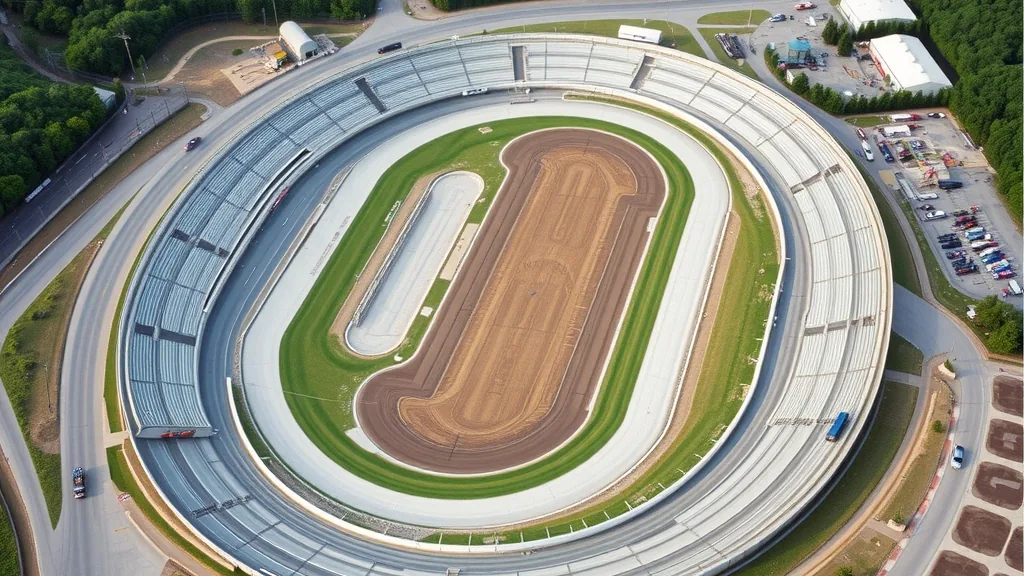
Martinsville Speedway at a Glance
The numbers explain why the racing looks different from a superspeedway. Martinsville is short, slow, and narrow, so cars spend most of the lap either braking or trying to get back to the throttle without spinning the rear tires.
| Detail | Figure |
|---|---|
| Track length | 0.526 miles (0.847 km) |
| Shape | Paperclip oval, two long straights |
| Corner banking | 12 degrees |
| Straight banking | 0 degrees |
| Location | Ridgeway, Virginia |
| Opened | 1947 |
| Cup Series races per season | Two, spring and fall |
Why the Paperclip Drives the Way It Does
With no banking on the straights and only 12 degrees in the turns, Martinsville is a braking track. Drivers carry speed down the straight, then slow hard and roll the center of the corner. The car has to rotate without sliding, because the outside wall is close and the inside is a flat apron.
That layout creates contact. Bumpers are used to move a car out of the way, and a pass usually starts several corners before it is completed. Track position matters more than raw speed, which is why crew chiefs will trade a fast lap for a car that can run side by side for 30 laps.
Brakes are a genuine failure point. Teams bring large cooling ducts and monitor brake temperatures through a run, because a driver who leans on the pedal too early can burn through a set before the final stage.
Tickets and Race Weekend
Martinsville hosts two Cup Series weekends, one in spring and one in the fall playoffs. The track is small enough that most seats have a view of the whole oval, and the frontstretch grandstands put you close to pit road.
Book early for the fall race, which usually decides which drivers advance in the playoffs. Spring races are easier to buy on short notice and often cheaper. Midway and grassy areas around the track are popular for families, and parking is spread across lots within walking distance of the gates.
The track is in a rural part of Henry County, so expect a drive from larger cities. Roanoke, Virginia, is the nearest substantial airport and hotel base, roughly an hour away. Race weekend traffic builds early, and the two-lane roads around the speedway move slowly after the checkered flag.
The Hot Dog and the Grandfather Clock
Two traditions define a Martinsville weekend. The first is the Martinsville hot dog, a simple steamed dog with chili, slaw, onions, and mustard that has been sold at the track for decades. The second is the grandfather clock handed to the race winner, a Ridgeway-made timepiece that ties the trophy to the local furniture industry.
The clock is more than a novelty. Drivers talk about wanting one the way drivers elsewhere talk about a Daytona 500 ring, because it is awarded only twice a year and it fits in a hallway rather than a trophy case.
The food is part of the ritual too. Concession lines form early, and the hot dog is cheap enough that families buy them by the tray. Local vendors around the track lean into the tradition, which is why the smell of chili and onions is as much a part of a Martinsville memory as the noise.
Both traditions survive because they are local. A corporate sponsor can put its name on a race, but it cannot manufacture a clock made down the road or a hot dog recipe that regulars have eaten for decades.
Where to Follow the Race
The broadcast changes by season. Many Cup races air on Fox or NBC, with a portion of NBC’s schedule carried on cable. Our guide to NASCAR on USA Network explains how the cable window works and how to stream it.
Qualifying matters more here than at most tracks. Because passing is difficult, a good starting spot is worth several positions on the day, and teams will trade race pace for a single quick lap. Watch the qualifying order and the mock runs in practice to see who has the short-run speed.
Fuel strategy is another factor. A long green-flag run can stretch the window, and a caution near the end often turns the race into a track-position gamble. Crew chiefs who save a set of tires for the final 100 laps usually have the advantage.
If you want the technical side of the sport, the supercharged cars in blowers racing are the opposite of a Martinsville lap: huge power, a straight line, and no braking zone. If you want to compete while you watch, try how to play Fantasy NASCAR at Martinsville Speedway. For official schedules and ticket links, use NASCAR.com.
How long is Martinsville Speedway?
Martinsville Speedway is 0.526 miles around, which is 0.847 kilometers. The short length is why a Cup race there runs to 400 or 500 laps rather than a fixed distance in miles.
Why is Martinsville called the paperclip?
The track has two long straights joined by tight, lightly banked corners, so from above it looks like a paperclip. The shape produces heavy braking, close contact, and very little passing room.
What trophy does the Martinsville winner get?
The winner receives a grandfather clock made in the Ridgeway area of Virginia. It has been the track’s signature trophy since the tradition began and is awarded at both Cup races each season.

John Oey is a senior sports writer at Blowers Racing covering NASCAR, drift, Olympics, and sports analytics. 7+ years, 180+ guides. Method: official rulebooks, historical archives, and statistical databases. Author of 1,750 sports guides since 2022.



More Stories
10 Secrets to Winning More Greyhound Races
Ford Mustang – Third Party Variants
The Good Thing About Oxley Edge